
A sticky August in North Texas does something specific to a closed-up house. The air conditioner runs hard, and condensation collects where nobody looks. A slow drip under the kitchen sink turns into a colony behind the cabinet. I’ve walked into homes near White Rock Lake in late summer where the owner swore nothing was wrong until we pulled the toe-kick off. Selling a house with mold in Dallas is legal and common, and it’s usually a smaller problem than sellers fear. The paperwork and the pricing trip people up far more than the spores do.
What Counts as Mold in a Dallas, TX Home Sale?
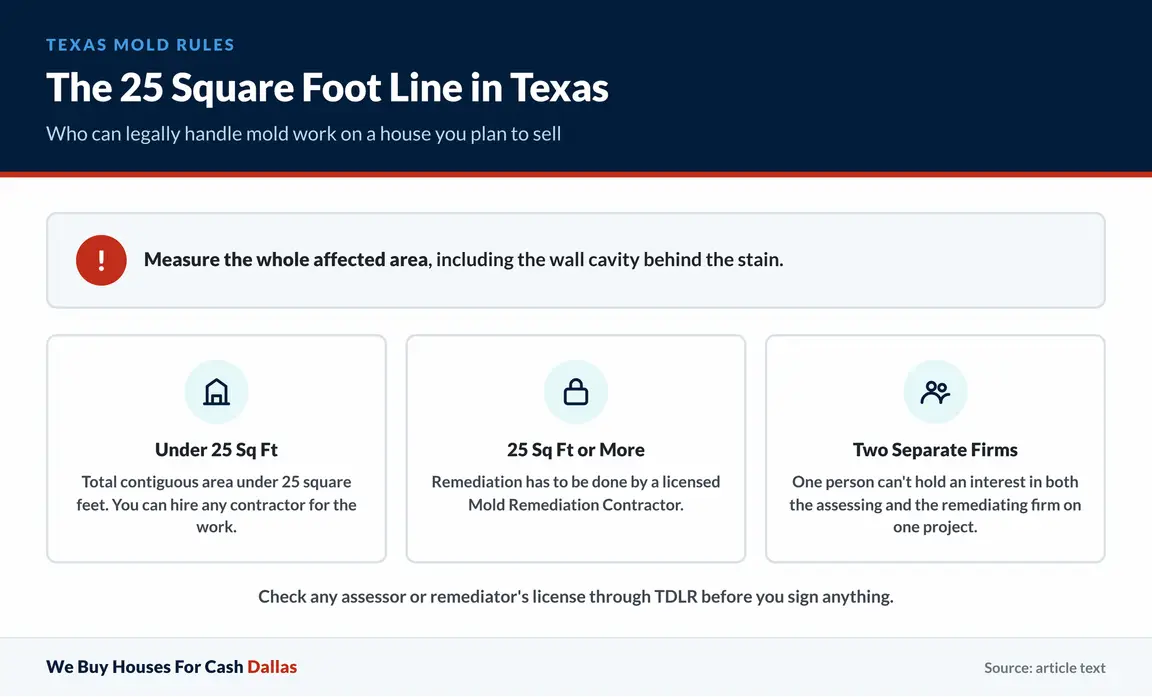
Texas law draws a square-footage line that decides who can legally touch the problem. Below 25 contiguous square feet of affected area, no license is needed, so an owner can hire any contractor for the work. At 25 contiguous square feet or more, a licensed Mold Remediation Contractor has to do the remediation. Sellers love to argue over whether their patch qualifies. Where the line falls tells you far more than the color of what’s growing.
Buyers and agents throw around “black mold” as if it were a diagnosis. Stachybotrys chartarum is one species among thousands, and a lab result naming it doesn’t automatically mean a teardown. In a Dallas transaction, the moisture source drives the conversation. Maybe it’s a failing HVAC drain pan or a roof flashing leak after one of our spring hailstorms. Sometimes it’s a slab plumbing break under a Lakewood bungalow.
Surface mold from a drain pan is a weekend of bleach and better airflow. Months of water from a hidden pipe leak inside a wall is another job entirely, with containment, negative air and demolition.
A while back, I bought a small rental from a widow in Pleasant Grove who’d inherited it and never wanted to be a landlord. Her last tenant moved out on a Friday. By the time she got inside, the washer hookup had been weeping behind the drywall for months. That’s how a house with mold usually reveals itself, once someone finally pulls the baseboards.
Those rules reach you through the people you hire. Non-exempt assessors and remediators must be licensed through the Texas Department of Licensing and Regulation. One license holder can’t do both the assessment and the remediation on a single project. Nobody can own a stake in both firms on that job, either. Plenty of licensed firms work in Dallas, and you can look any of them up before signing anything.
Can You Sell a House with Mold in Dallas, TX?
A Dallas sale like this usually wobbles during the option period. Someone touring a Preston Hollow house smells the crawl space, the inspector writes it up, and the contract dies. After the second walkaway, most owners stop relisting and start asking about an as-is sale.
No Texas law forbids selling a house with mold. You can list it on MLS, sell it to a neighbor, or sell it to an investor. The sale is perfectly valid as long as you disclose what you know.
Financing is where the friction shows up. Conventional, FHA and VA lenders all send an appraiser. Visible moisture damage or active growth in the photos can trigger a repair condition before funding. That lender decision, not any legal prohibition, is why these houses so often land with a cash buyer instead of a first-time homebuyer on an FHA loan.
Timing matters most for a Dallas seller weighing options. In October 2026, the average resale home across Dallas-Fort Worth sold for about $458,600, down 0.6% from a year earlier, according to North Texas MLS data. Homes are taking longer to sell than they did in early summer, too. Add escrow, and a clean house can need about three months from listing to funding. One failed appraisal restarts that clock.
Listing makes sense for some sellers. Others face a job transfer, a probate deadline or a mortgage they can’t carry, and the arithmetic points them elsewhere. At We Buy Houses For Cash Dallas, we’ve bought plenty of houses from that second group. Nobody has ever been asked to scrub a wall first.
Do Dallas, TX Sellers Have to Disclose Mold?
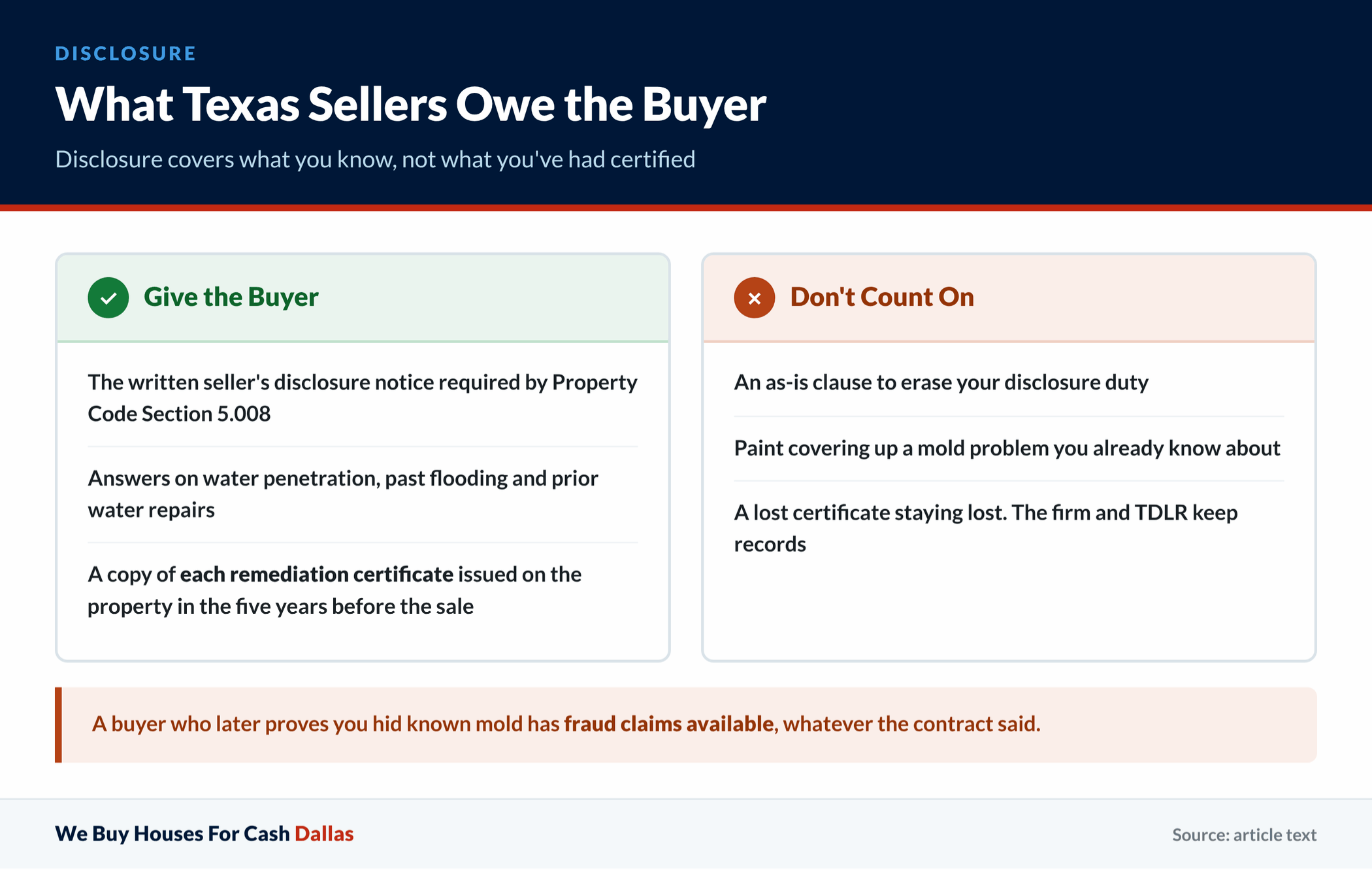
Texas wants disclosure of what you know, not what you’ve had certified. Section 5.008 of the Texas Property Code covers a seller of residential property with no more than one dwelling unit. Each one owes the buyer a written notice in the form the statute prescribes. The official version lives on the Texas Real Estate Commission site, and it walks through the material facts and physical-condition items Section 5.008 calls for.
For a house with mold, the questions that matter most ask about water penetration, previous flooding and earlier repairs tied to water damage.
The second rule surprises plenty of sellers in Dallas. An owner who sells must give the buyer a copy of each remediation certificate issued on the property in the five years before the sale, per Occupations Code Section 1958.154. The Texas Attorney General’s consumer page covers how those certificates work. The remediator has ten days after finishing the work to issue that certificate. It carries an assessor’s statement that the contamination was cleaned up per the plan, and it shows whether the underlying cause got fixed. Can’t find yours? The licensed firm that did the work keeps records, and TDLR can answer questions about getting a copy.
Sellers also get one point wrong constantly: an as-is clause doesn’t erase disclosure duty. Selling as-is only means the buyer accepts the condition without demanding repairs. It doesn’t license hiding anything you know about. A Dallas buyer who later proves you concealed known mold can bring fraud claims, whatever the contract said.
How Does Mold Affect Your Dallas, TX Home’s Value?
Mold itself doesn’t knock the price down. Value drops because fewer buyers will compete for it, and the ones who stay negotiate hard.
A repair bill is only part of the hit. Hold a four-thousand-dollar remediation quote in Dallas, and offers can land eight or ten thousand under comps, because buyers price the unknown rather than the invoice. I’ve sat through inspection negotiations here where a small finding turned into a large credit request.
Neighborhood counts for more here than the condition report does. In Lake Highlands or Bishop Arts, where buyer demand stays thick, a documented and remediated house recovers most of its value. In softer pockets of southern Dallas, the same issue clings to the price longer.
Don’t count on appreciation to close the gap. Prices across Dallas-Fort Worth have barely moved over the past year, so any discount comes straight out of your equity.
What really destroys value is a house with mold that sits. Each failed contract adds days on market. Dallas buyers scroll right past a listing that’s been active for ninety days with two price cuts.
Does Mold Affect Home Appraisals in Dallas, TX?
An appraiser assigns value and flags conditions. Visible growth or active moisture in the photos usually sends the appraisal back “subject to” repairs. In that case the lender won’t fund until a licensed professional clears it. FHA and VA files are stricter still, because both programs set minimum property requirements for safety and soundness.
Picture a buyer under contract on a house with mold in Vickery Meadow. The appraisal comes back subject-to. Now the seller pays for remediation before closing, the buyer pays and takes a credit, or the sale falls apart.
Cash sales skip that whole chain. No lender, no underwriter, no appraisal condition. That’s the structural reason these Dallas houses tend to trade to investors, even when the seller would have preferred a retail buyer.
Your leverage in that negotiation depends on Dallas inventory. Median days on market across the Dallas-Fort Worth-Arlington metro reached 64 in October 2026, up from 51 in June, according to Realtor.com data tracked by the St. Louis Fed. Slower markets give buyers room to push on condition.
How Much Does Mold Remediation Cost in Dallas, TX?
Start with the national figures. HomeAdvisor’s cost data puts the average job at $2,365, with most homeowners spending between $1,223 and $3,751. Pricing generally runs $10 to $25 per square foot of affected area. Dallas labor rates sit close to the national figures, so those ranges travel well here.
Scale changes the math. Whole-house remediation, where every affected surface and system gets treated, commonly lands between $10,000 and $30,000. A slab leak that fed a wall cavity under a 1950s Casa View ranch for two years doesn’t stay a two-thousand-dollar job.
Remediation removes contaminated material, but it doesn’t put your drywall, insulation, cabinets or flooring back. Budget the restoration separately, or the second invoice will sting.
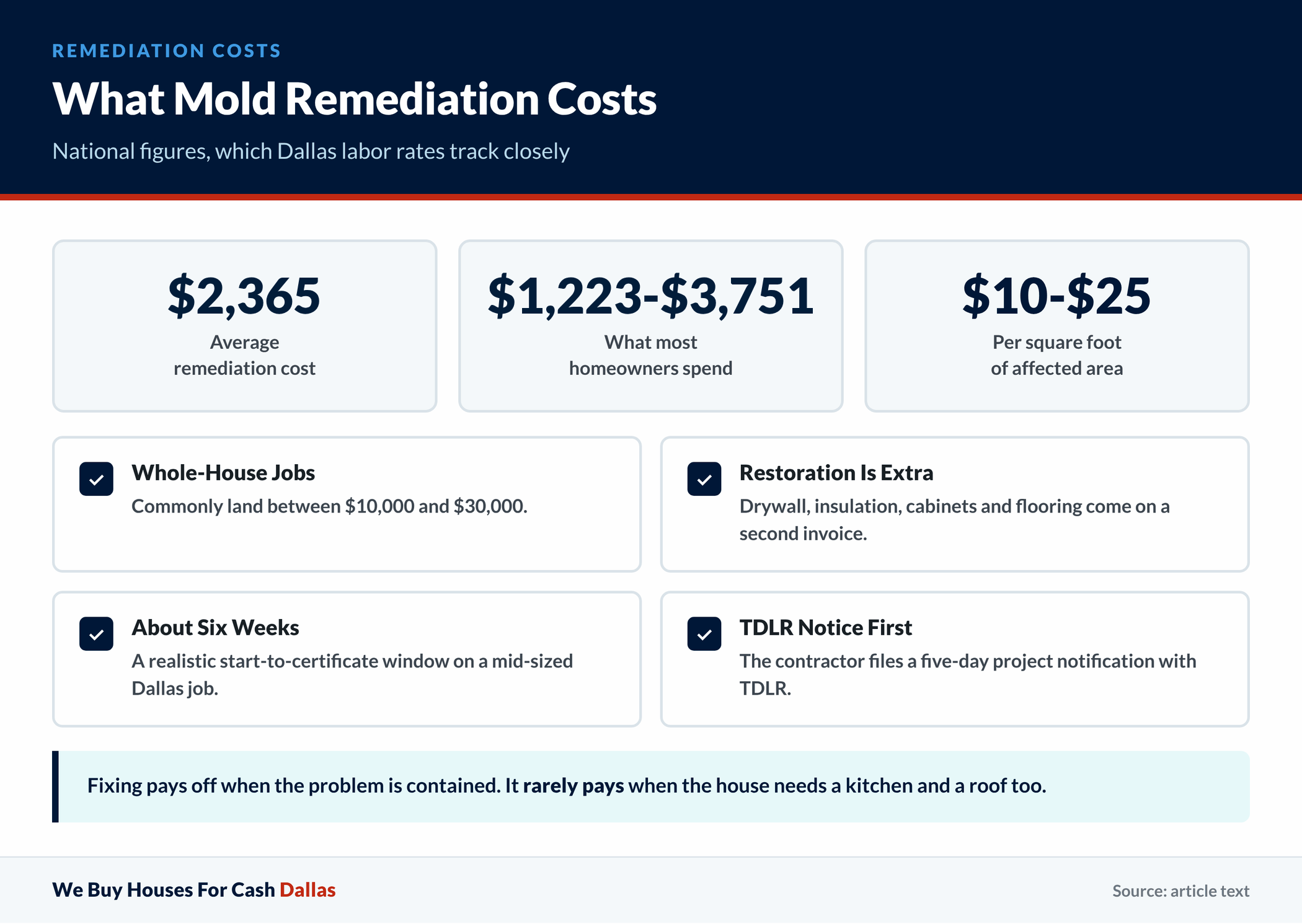
On top of that come the assessor’s protocol, the clearance test and the contractor’s notice to TDLR at least five days before work starts. Six weeks is a realistic start-to-certificate window on a mid-sized Dallas job. It runs longer if the first clearance test fails.
Fixing a house with mold pays off when the problem is contained and the home will show well afterward. It rarely pays when the house needs a kitchen and a roof too. Pouring remediation money into a property that still won’t appraise is the most expensive mistake I see Dallas sellers make. I’d rather talk you out of it than watch it happen.
Mistakes Dallas, TX Sellers Make with Mold Problems
Twenty-five contiguous square feet. That number decides whether your handyman can legally do the work. Sellers blow past it all the time because they measured one wall and ignored the cavity behind it. An unlicensed cleanup on a larger area leaves you with no certificate and no proof for the next buyer.
Paint tempts people next. Stain-blocking primer on an Oak Lawn fourplex ceiling hides the discoloration for about three months. An inspector’s moisture meter finds the damp spot in seconds.
Some sellers wait on the insurance company instead. Residential property insurance doesn’t cover all water and mold damage. Texas homeowners policies have carried mold limitations for more than two decades.
Over-testing makes its own mess. A seller orders three separate air samples, hoping one comes back clean. Now three reports exist, and every one has to be handed over. Test once, with a licensed assessor, and work from that.
Then there’s pricing. Sellers list a house with mold at full comp value and collect no showings for forty days. Then they cut twice and end up below what an as-is offer would have paid on day one. Buyers here do their homework, and a condition issue priced as if it doesn’t exist reads as a seller who isn’t serious.
What Are Your Options for Selling a House with Mold?
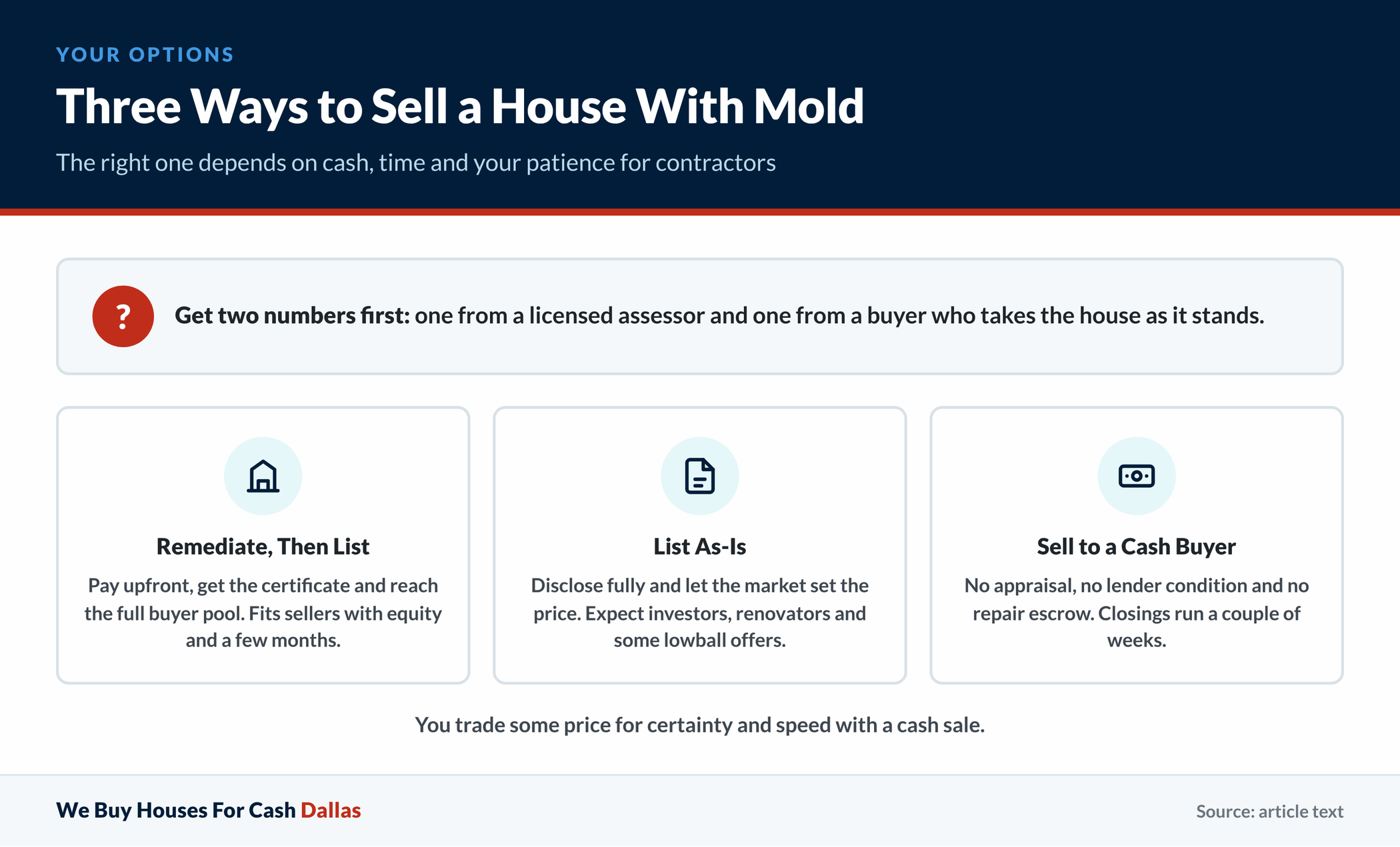
Three paths exist, and the right one depends on cash, time, and how much appetite you have for managing contractors. Most Dallas sellers I meet have already picked one before they call. What they want is someone to confirm it.
Path one is to remediate, then list retail. You pay upfront for the certificate and in return reach the full buyer pool at retail pricing. It suits sellers with equity, a cushion and a few months of patience.
Listing as-is with full disclosure is the middle road, with the market setting the price. You’ll draw investors and renovation-minded buyers, plus a fair share of lowball offers.
The third option is selling directly to a cash buyer. No appraisal, no lender condition, no repair escrow. Closings run a couple of weeks instead of a couple of months. You’re trading some price for certainty and speed, and that trade is honest when it’s made with open eyes.
For statewide context, Texas as a whole has cooled. Redfin put the October 2026 median across Texas at $324,640, down 3.1% year over year, with median days on market at 70. Dallas is holding up better than that, so an as-is seller here has more buyer competition than a seller in most of the state.
A couple in Lancaster called me on a Thursday about a hall bath where a cracked shower pan had soaked the subfloor. They’d already moved for work and didn’t want to manage a remediation crew from a distance. We bought it as it stood, and they never had to drive back.
Before you commit to any path, get one honest number from a licensed assessor and one from a buyer who’ll take the house as it stands. Put those two figures side by side, and the question usually answers itself. I’ve watched that comparison settle a seller’s mind in minutes. Our team at We Buy Houses For Cash Dallas will give you the second number without asking you to clean a thing.
Bring your paperwork to that comparison. The disclosure notice, any remediation certificates and the assessor’s report let both sides price the same house with mold instead of guessing. Documents on the table leave less room to chip at the number later. You’ll also skip answering the same questions twice.
Frequently Asked Questions About Selling a House with Mold in Dallas, TX
Where Can I Get a Free Mold Inspection in Dallas?
Several remediation companies around Dallas advertise free visual inspections, and they’re fine for a first look. A free visit from a company that also sells remediation isn’t the independent assessment Texas expects for clearance work, since the state keeps assessing and remediating separate. For a report you can hand a buyer, pay a licensed Mold Assessment Consultant. Check the license through TDLR before the appointment.
Will a Buyer’s Lender Refuse the Loan If There’s a House with Mold?
Not outright, though the loan usually stalls. Most lenders condition funding on fixing visible growth and the moisture source behind it. Whoever can pay before closing ends up carrying the cost. Government-backed loans carry the strictest property standards, so FHA and VA buyers are the likeliest to drop out of a Dallas sale over this.
Can I Sell a House with Mold to a Family Member or Investor Without a Disclosure Form?
Certain transfers are exempt from the standard notice. Those exemptions are narrow, and they never shield you from fraud liability. Even in an exempt sale, tell the buyer in writing what you know about water intrusion and any growth. A one-page signed statement in the file protects you far better than a handshake, and it costs nothing.
Does Remediation Have to Be Finished Before I Can List a House with Mold in Dallas?
No. Dallas listings with disclosed condition issues go up every week, and as-is language is standard in Texas contracts. You’ll attract a different buyer at a different price, but the sale itself is routine. If a certificate was issued on the property within the past five years, a copy goes to the buyer no matter when you list.
How Fast Can a Cash Sale Close on a House with Mold?
Two to three weeks is typical once title work clears, because there’s no appraisal and no lender underwriting the condition. Probate, liens, or a pending foreclosure date can stretch that, and a good buyer will tell you upfront if your situation adds time. Set that window against the Dallas listing-to-closing timeline described above before you decide.
Should I Test for Mold Before Selling If I Only Smell Something Musty?
A musty smell in a Dallas home in July often traces back to an HVAC condensate line or a poorly vented bathroom. Finding that moisture source does more for you than a spore count. Testing also hands you information you’ll have to disclose, so decide ahead of time what you’ll do with the result. If you plan to sell as-is to a cash buyer anyway, paying for testing rarely changes your outcome.
How the Dallas Market Treats a House With Mold
Dallas buyers have more homes to choose from than they did a few years ago. Choice like that shapes how a house with mold sells. Redfin reported that 55% of Dallas listings were still unsold after 60 days in May 2026. A house with a known condition issue tends to sit near the back of that line.
Our team buys houses with mold across the city, from Lake Highlands to Pleasant Grove. You don’t have to clean or test anything before we take a look. Houses in the nearby suburbs count too, and we also work as cash home buyers in Garland.
Talk With Us About Your House With Mold in Dallas
Mold looks different in every house, and so does the right next step. If you’d like a no-obligation cash offer to set beside a remediation quote, reach out to our team with a few details about the property.
You can also use the short form below, and someone from our office will follow up.
Helpful Dallas Blog Articles